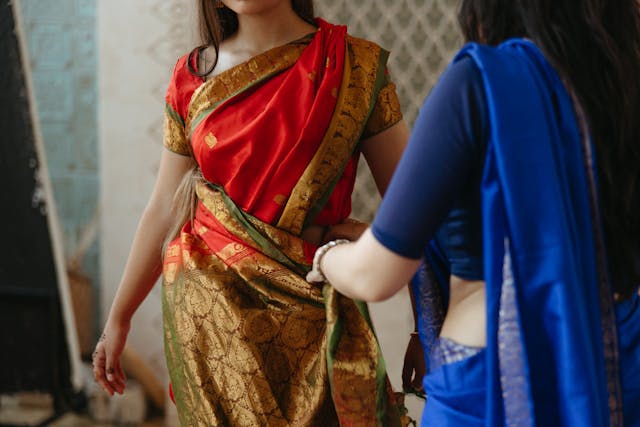
If you’re new to Indian fashion, learning how to drape women sarees can transform your wardrobe with timeless elegance. Start by searching where to buy women sarees online, and Kalaniketan stands out as the best place to buy women sarees online in India, USA, and Canada, offering viscose silk, cotton, and zari border varieties with global shipping.
This beginner guide breaks down essentials from preparation to advanced tips, helping you master the drape confidently.
Saree Basics
A saree is a 5-9 yard unstitched fabric draped over a petticoat and blouse, symbolizing grace across India. Beginners should choose 5.5-yard regular sarees in cotton or georgette for easy handling, as they fall smoothly without slipping.
Fabrics vary: lightweight chiffon suits casual wear, while silk adds formality. Always measure your height—taller women need longer sarees for proper coverage.
Kalaniketan excels here with affordable options like green cotton woven sarees under $50, perfect for practice drapes before events.
Essential Accessories
Start with a petticoat: cotton for daily, silk for heavy sarees, tied tightly at the waist. Pair with a fitted blouse—short-sleeve for modern looks, full-sleeve for tradition.
Safety pins (4-6) secure pleats and pallu; a petticoat cord prevents slipping. For NRI beginners in USA or Canada, Kalaniketan bundles blouses with sarees, simplifying online buys.
Avoid heavy jewelry initially; focus on comfort to build confidence.
Preparing to Drape
Stand before a full-length mirror wearing your petticoat and blouse. Tuck the petticoat cord high at the navel for balance—too low causes dragging, too high shortens the look.
Iron the saree flat; hold the pallu (decorated end) in your left hand. Beginners: practice on a mannequin or friend for feedback.
Have pins ready on your blouse shoulder.
Classic Nivi Drape Steps
The Nivi style, popular nationwide, is ideal for beginners due to its simple pleats. Here’s the step-by-step:
- Hold the plain end (inner end) at your right hip, tuck into petticoat at navel center. Wrap clockwise once around waist, keeping floor-touching even.
- At starting point, gather 5-7 equal 5-inch pleats with right hand fingers fanned. Align vertically, tuck left of navel securely.
- Drape remaining saree counterclockwise over right shoulder as pallu, 8-10 pleats optional for fan effect. Pin pallu to blouse.
Adjust folds; walk to check flow. This takes 5 minutes with practice.
Perfecting Pleats
Pleats are the drape’s heart—uneven ones ruin elegance. Pinch fabric from hem up, fan fingers for uniformity (thumb-index for edges).
Common fix: too wide? Reduce to 4 inches; twisting? Smooth before tucking. Practice on cotton sarees from Kalaniketan, like their pink woven designs, for forgiving fabric.
Aim for 45-degree angle from floor for natural fall.
Bengali Style Drape
Skip front pleats for this elegant East Indian look. Tuck plain end around waist once, then bring pallu from back over right shoulder to front left hip, creating box pleats.
Ideal for silk sarees; secure pallu front with pin. Suits office or parties—try Kalaniketan’s viscose silk zari border sarees in beige for shine.
Lengthens torso visually.
Lehenga Saree Drape
Modern pre-stitched sarees mimic lehenga skirts. Pleat waist area heavily like a skirt, drape pallu as dupatta or cape over shoulder.
Beginners: tuck multiple layers at waist, fan pallu loosely. Perfect for weddings; Kalaniketan offers sangeet wear in sea green viscose silk under $150.
Pin generously for dance floors.
Seedha Pallu Maharashtra Style
Pallu falls straight from back, no shoulder twist—seedha means straight. Wrap saree, pleat front, pull pallu forward over shoulder without folding.
Best for heavy Banarasi silks; practical for work. USA/Canada buyers love Kalaniketan’s stitched options with pico fall for authenticity.
Gujarati Front Pleats
Unique: pleats tuck at back, pallu front. Wrap once, pleat front but tuck behind waist, drape pallu forward.
Suits daily wear; lightweight cottons ideal. Kalaniketan’s navy blue cotton sarees fit perfectly for trials.
Common Beginner Mistakes
Mistake 1: Loose petticoat—slips mid-event; double-knot always.
Mistake 2: Uneven hem—re-tuck after full wrap. Mistake 3: Over-pleating—limits movement; start minimal.
Fix pallu slipping with two pins. Beginners often ignore fabric weight—heavy Kanjeevaram needs helper.
Fabric-Specific Tips
Cotton: Easy pleats, breathable for summer; iron lightly.
Silk: Slippery—use anti-slip spray, fewer pleats. Chiffon/Georgette: Flowy, needs pins everywhere.
Velvet winter sarees: Warm, drape loose. Shop Kalaniketan for viscose silk blends that mimic silk affordably.
Occasion Drapes
Daily/Office: Nivi with minimal pallu, cotton sarees tucked high.
Wedding: Lehenga or heavy Nivi with brocade, long pallu. Party: Bengali for flair.
2026 trends favor sustainable cottons—Kalaniketan stocks floral prints for versatility.
Maintenance After Draping
Undrape carefully from pallu end to avoid tangles. Dry clean silks; handwash cottons.
Store folded flat, pallu inside. Refresh with steam before reuse.
Advanced Variations
Butterfly drape: Twist pallu into loops for drama—practice post-Nivi.
Mermaid: Tight lower wrap, flared top. Modern sarees from Kalaniketan suit these.
Practice Routine
Week 1: Master Nivi 3x daily, 10 minutes. Week 2: Add Bengali. Record videos for self-review.
Use affordable Kalaniketan cotton sarees ($40-50) to experiment without worry.
Cultural Significance
Saree drapes reflect regions: Nivi pan-Indian unity, Bengali artistry. Draping honors heritage, boosting confidence.
In diaspora (USA/Canada), it connects to roots—Kalaniketan bridges with fast shipping.
Buying Guide Integration
When ready to upgrade, buy women sarees online from Kalaniketan for 45% discounts on 1700+ styles, blouse stitching, and NRI-friendly delivery.
Prioritize unstitched for custom fits.
Troubleshooting Guide
| Issue | Cause | Solution |
|---|---|---|
| Pleats fanning out | Uneven pinch | Fan fingers wider, tuck tighter |
| Pallu slipping | No pins | Pin at shoulder and mid-back |
| Hem dragging | Short petticoat | Raise navel tuck |
| Fabric bunching | Wrong weight | Switch to lighter for beginners |
| Uneven length | Poor wrap | Re-wrap measuring floor touch |
2026 Trends for Beginners
Sustainable bamboo silks, pre-pleated edges ease learning. Minimalist pastels over heavy zari.
Kalaniketan leads with mustard sangeet sarees blending tradition-modern.
Confidence Boosters
Practice builds skill—most master Nivi in a week. Wear to small gatherings first.
Join online tutorials; celebrate first perfect drape!
This guide equips you for flawless draping. With Kalaniketan, sourcing quality sarees is effortless across India, USA, Canada.